THE HISTORY OF WARRI KINGDOM
Warri Kingdom, also called Iwere Kingdom, is one of the oldest and most influential kingdoms in present-day Delta State, Nigeria
Origin and Early Settlement
Before it became a kingdom, the area now known as Warri was inhabited by different groups. The Itsekiri people migrated from Ile-Ife, Ode-Omi, Ilorin, Ilaje, Ikale, Igala around the 9th and 11th century migration and Benin in the 1473 to 1480 to be precise and first settled at Ijala and later to Ode-Itsekiri (Big Warri). The name "Warri" is believed to be a Portuguese corruption of "Iwere".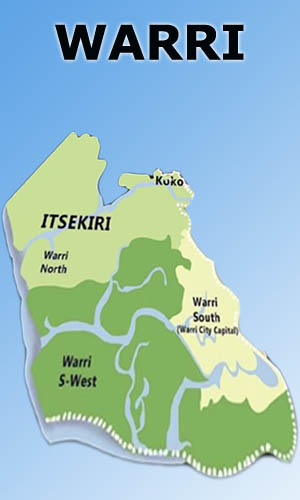
Language Semblance
It is pertinent to mention that the Yoruba Language is a common Lingo spoken by a host of Yoruba Groups such as Egba, Ijebu, Ekiti, Owo, Ibadan, Ijesha, Akure, Ondo, Oyo, Ikale and Ilaje etc, each group have their own distinctive dialect. The people of Owo refer to a Palace as Aghofen and not Afin like the Oyo indigenes, the Owo Indigenes employ the English word welcome as Erubo and not Ekabo like the Awori indigenes of Lagos, the Ekiti dialect translates the English word Yours as Te re and not Ti re as pronounced by the natives of Ibadan. With this short demonstration of semblance in the dialects one will decipher that the Itsekiri share a lot in common with these Yoruba groups..This narrative of the above paragraph is simply true and devoid of any misgivings. To echo such facts, Late Justice R.A.I Ogbobine described the Itsekiri Language as an Eastern Yoruba Dialect in his book titled 'The Iwere (Warri) Kindgom and The Olu's Overlordships Right In Itsekiri Land'.
Founding of the Kingdom - c. 1480
The Warri Kingdom was formally founded around 1480 when Prince Ginuwa, a son of the Oba of Benin, left Benin City with his followers. According to Itsekiri oral tradition: - Prince Ginuwa was sent by his father and the Seventy First Sons of Benin Chiefs to rule as King and Chiefs over the riverine part of the old Benin Kingdom, now known as Warri Kingdom. - He was crowned the first *Olu of Warri - Olu Ginuwa I*. - The Benin influence is still seen today in the royal regalia, titles, and palace traditions.The title "OLU"
Olu" means "King" or "Lord". The Olu became both the political and spiritual head of the kingdom. The kingdom combined Yoruba, Bini, Ijaw, Urhobo and later European trading influences because of its coastal location. .Growth as a Trading Power
By the 16th century, Warri became a major port for trade with the Portuguese. Items like pepper, ivory, cloth, and later palm oil were traded. This made the kingdom wealthy and cosmopolitan early on. By the 16th century, Warri became a major port for trade with the Portuguese..In Modern Times
The capital of the kingdom remains Ode-Itsekiri / Big Warri, while Warri Town grew later as the commercial hub and Administrative Headquarters of Warri Kingdom. The kingdom is still ruled by the Olu of Warri, and the present dynasty traces directly back to Olu Ginuwa I..